
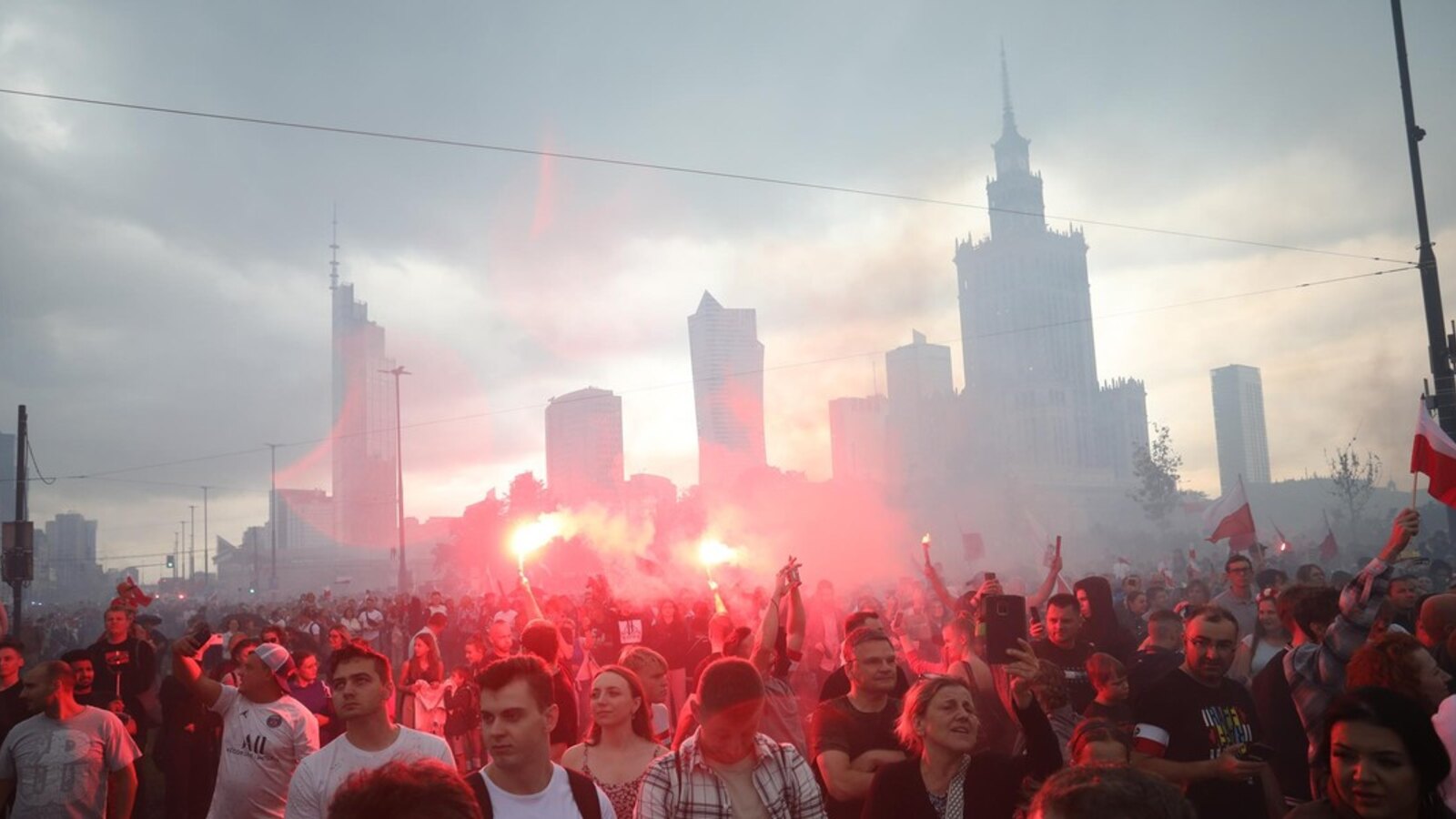
Yesterday, at exactly 17:00, Warsaw stopped.
Sirens sounded. Cars halted. Trams waited. People stood in streets, at crossings and beside monuments. Some held flags. Some lit flares. Some simply stopped speaking for a minute.
The city was marking the hour at which the Warsaw Uprising began on 1 August 1944.
Warsaw is not usually good at standing still. It is a city of construction fences, late buses, hurried people and drivers who regard the amber light as personal encouragement. Yet once a year, for one minute, the argument pauses.
It is one of the most powerful things about living here.
A minute that interrupts the present
The 2026 commemorations mark the 82nd anniversary of the Rising. The programme includes ceremonies, exhibitions, communal singing, a bicycle ride and events at memorial sites across the city. But the centre of it remains the same sixty seconds.
That minute does not explain the Uprising. It cannot carry the courage, the military choices, the civilian suffering, the German crimes, the destruction of the city or the arguments that still surround the decision to fight.
It does something more basic.
It refuses to let the past become background.
Modern life is extremely good at turning everything into background. War becomes a notification. A death becomes a number. An anniversary becomes content. We look, approve, perhaps press a small heart, and continue walking.
At 17:00, Warsaw makes continuing slightly difficult.
You hear the siren. Traffic is no longer normal. The person beside you has stopped. For one minute, the city insists that the people who lived, fought and died here are not merely material for a museum.
Memory is not the same as a record
We often confuse keeping information with remembering.
A record can sit perfectly preserved and change nothing. An archive can be complete while a society forgets what the documents mean. Institutions do this all the time. They store lessons, approve lessons, assign reference numbers to lessons and then recreate the same failure with newer software.
Memory is different. Memory affects behaviour.
It changes what a place means. It changes which names are spoken. It makes a street corner more than a route between two meetings. It creates duties, arguments and sometimes discomfort.
That is why public rituals matter, even when they are imperfect. They place memory back into shared space. They prevent remembrance from becoming a private hobby practised only by historians and relatives.
A city that stops is saying: this belongs to all of us.
This is not a management metaphor
There is a cheap way to write about Warsaw on 1 August. One can take sacrifice, resistance and mass death, extract three leadership lessons, add a photograph and return to discussing quarterly targets.
No.
People died. PowerPoint did not.
The event deserves to remain larger than whatever neat lesson a modern writer would like to borrow from it.
But there is still something worth noticing in the act of remembrance itself. Warsaw does not rely only on a document saying that memory is important. It puts the date into the life of the city. It makes buses, streets, institutions and people participate. It repeats the act before the previous generation has entirely disappeared.
That is how memory survives: not because information exists, but because people keep giving it consequence.
The work of remembering
Warsaw does not remember perfectly. No city does.
History here is political, emotional and sometimes selective. The symbols are used by people who disagree deeply about the present. A crowd can contain dignity, grief, anger, theatre and people who mainly came because other people came.
That does not make the minute false.
It makes it human.
Yesterday, Warsaw stopped again. Today, the traffic is back, the tram doors are beeping and somebody is drilling into concrete in a building that looked complete last week.
Normal life has resumed.
But for one minute it was interrupted by memory.
That is not much.
It is also not nothing.
The Warsaw Rising Museum's programme for the 82nd anniversary placed “W” Hour at 17:00 on 1 August 2026, alongside commemorations continuing into the following week.
Warsaw Rising Museum: 82nd anniversary programme →Hero photograph: Warsaw during “W” Hour in 2023, Krzysztof Burski / newspix.pl, via Fakt. Cropped for web display.
Original photograph and report →
Reader discussion
Join the discussion
Comments are moderated. Disagreement and strong opinions are welcome. Spam, threats and personal abuse are not.