
Ceuta showed why.
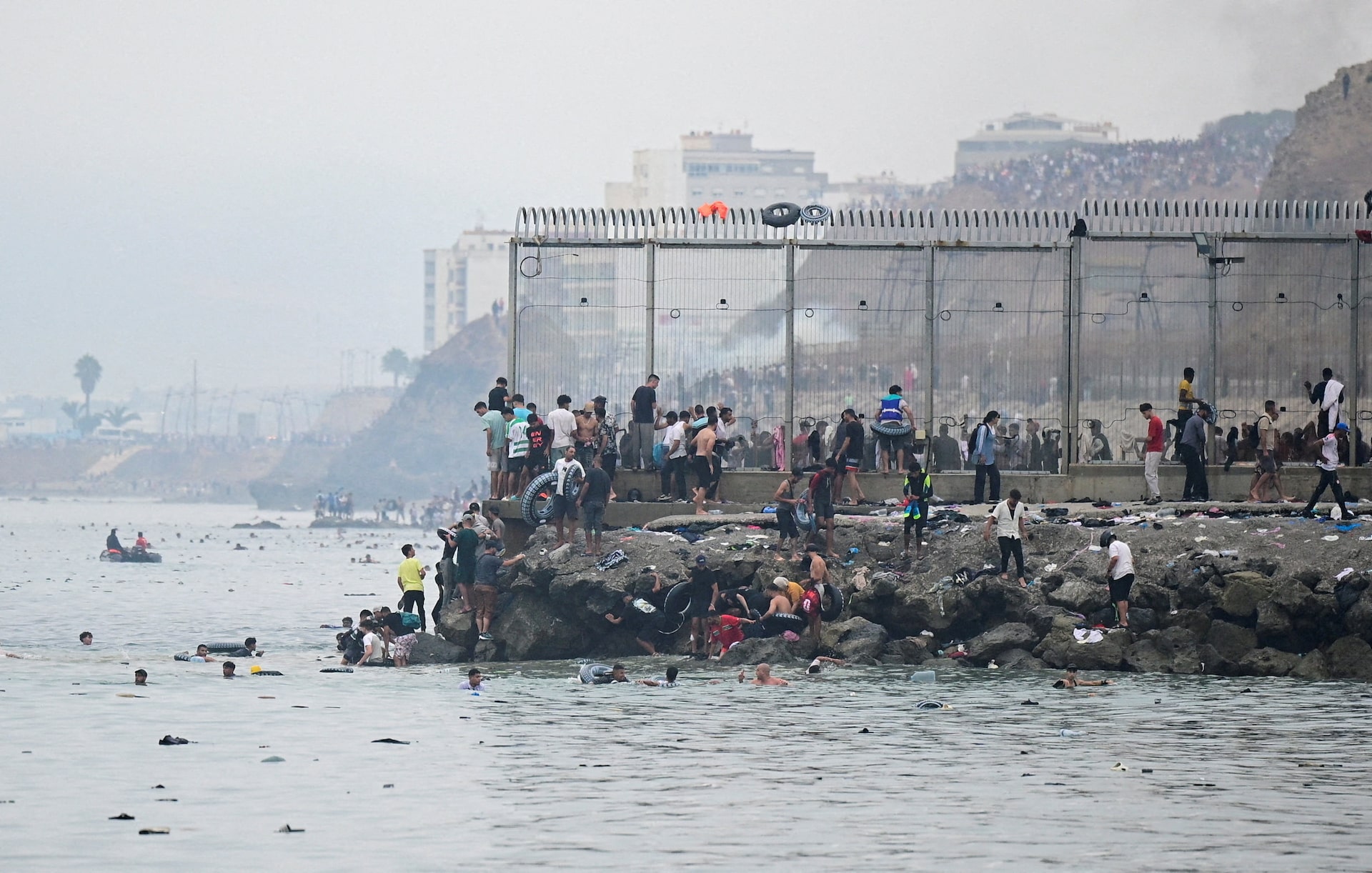
About 50,000 people crossed into Spanish territory from Morocco in little more than a day. Ceuta has about 85,000 residents. For several hours, the number of people pushing at the frontier mattered more than Spain's decision that they could not enter.
The border failed first. The forms came afterwards.
At Ceuta, the person who respected Spain's border remained outside it. The person who defeated it entered Spanish territory, activated Spanish procedures and became Spain's responsibility.
That is the central failure of European border policy. It is designed in extraordinary detail for what the state must do after unauthorised entry, but with far less seriousness about preventing that entry in the first place.
Europe has confused processing a breach with controlling a border.
They are not the same thing.
Ceuta was a security failure before it was an asylum case
Prime Minister Pedro Sanchez called the mass crossing a violation of Spain's territorial sovereignty. He was right.
In ordinary political language, Spain was invaded. A mass of people came from the territory of a neighbouring country, forced an international frontier, overwhelmed the available border force and entered a Spanish city without Spain's consent. Vehicles were burned. Shops closed. Residents feared for their streets, homes and businesses. The army arrived after the breach.
It is not necessary to settle here who planned, encouraged, tolerated or assisted every part of the operation. That is a separate question for investigators and intelligence services. The fact visible to everyone is sufficient: the frontier of a sovereign EU country was forcibly defeated.
Calling this an "irregular arrival" does not make the act smaller. Calling it a "migration flow" does not make it voluntary for Spain. Calling it an "asylum challenge" begins the story at the point most convenient for the authorities - after they had already failed.
The act came first. The border was breached. Public order was attacked. Spanish citizens were forced to absorb the consequences.
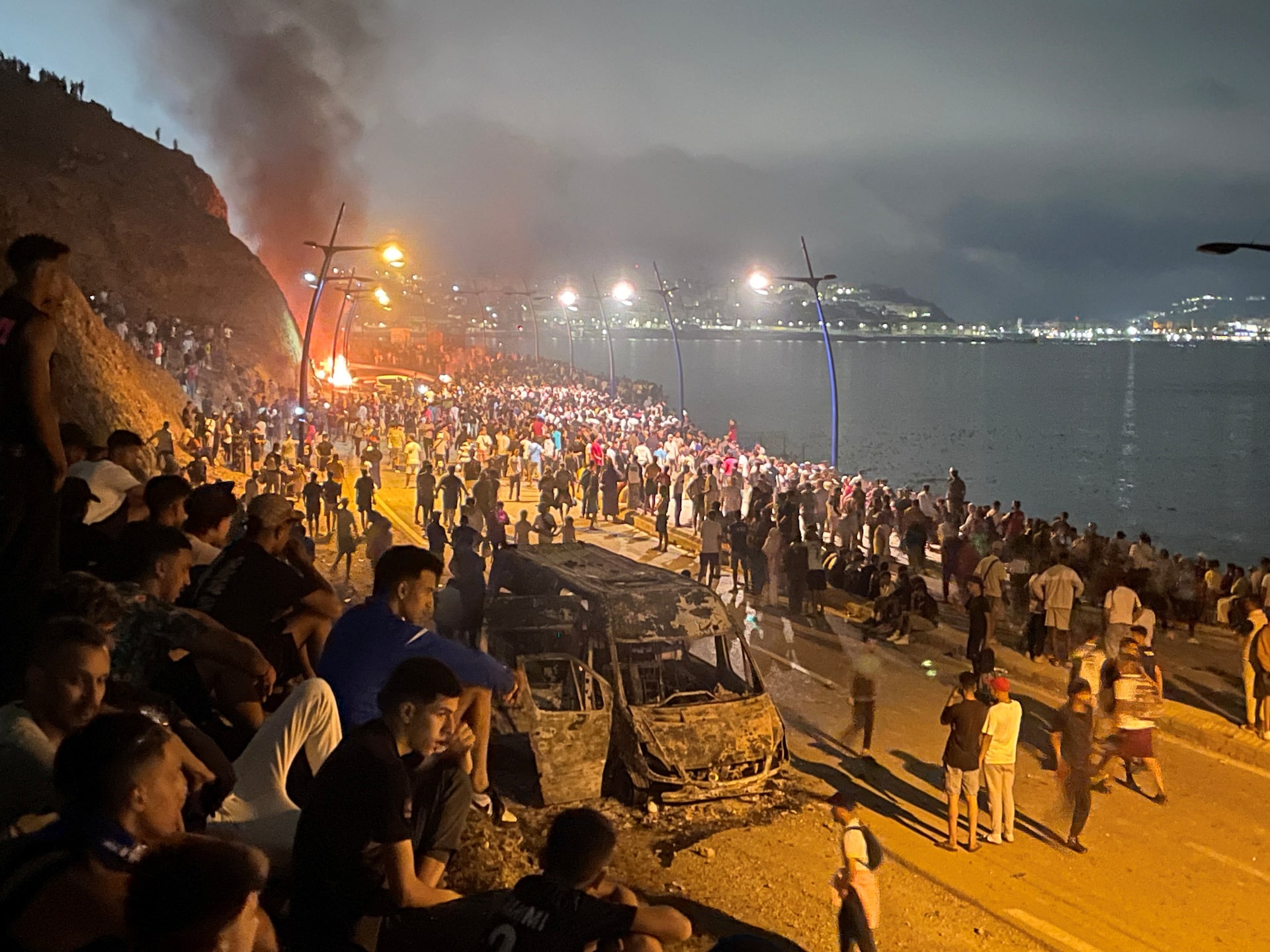
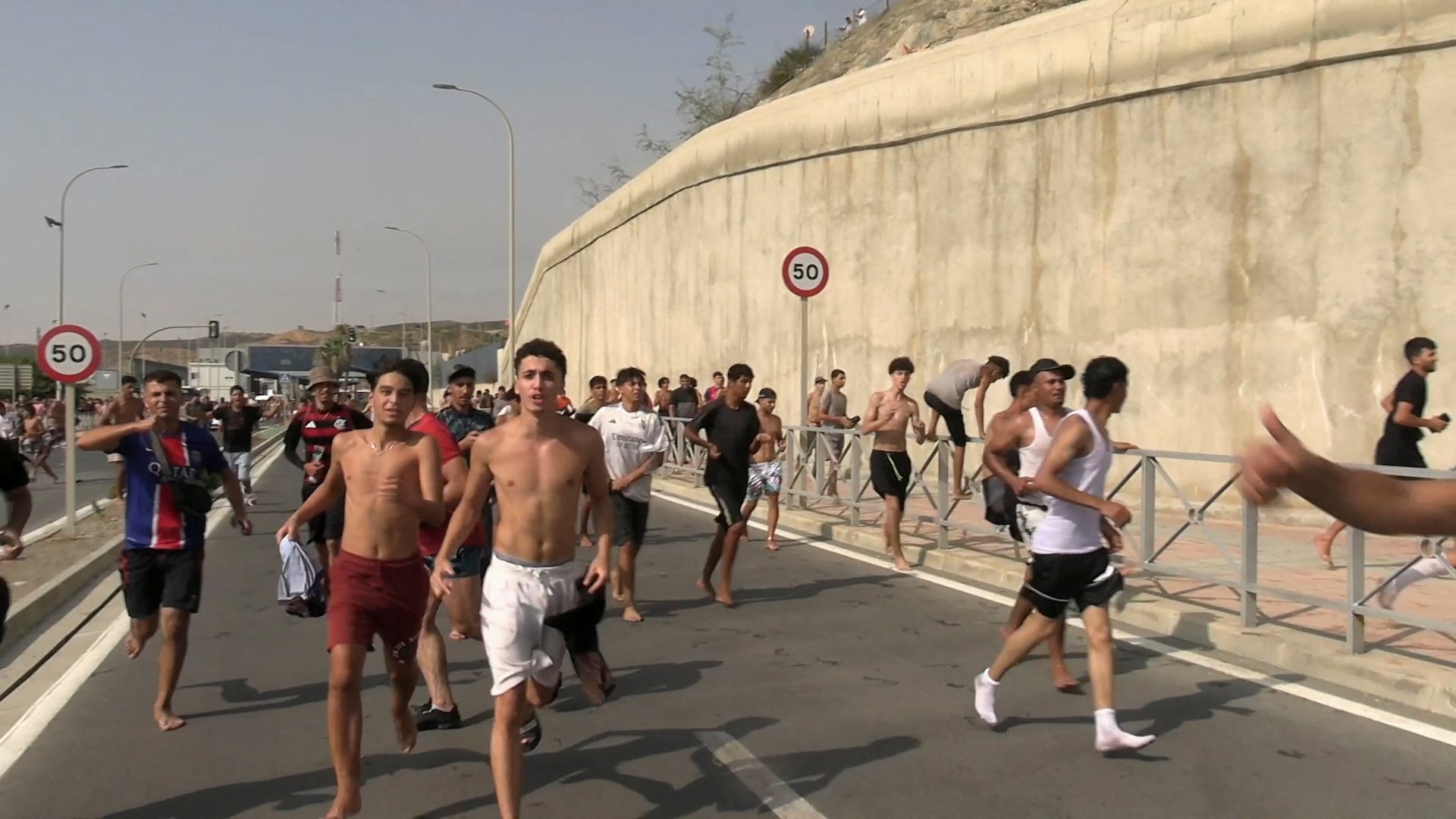
Most entrants later returned voluntarily. That reduced the immediate emergency, but it did not prove that Spain controlled the frontier. They entered when the crowd found a way through. Most left when Ceuta could not provide food, shelter or onward movement on the scale they expected. Spain did not make 50,000 orderly admission decisions and then execute 48,300 individual return decisions.
The crowd largely decided when it entered and when it left.
That is traffic, not sovereignty.
Europe starts the process on the wrong side of the fence
An administrative reception desk begins its work when somebody arrives. It registers a name, opens a file, checks documents, arranges accommodation, hears a claim, schedules an interview and eventually issues a decision.
All of that may be necessary after a person is under state control. None of it is border defence.
A security perimeter works in the opposite order. It detects the approach. It identifies the threat. It blocks unauthorised access. It brings reserves forward before the line collapses. It uses barriers, surveillance, command, intelligence and lawful force to make a prohibited entry fail.
Only after control has been preserved does administration begin.
Europe has built the second half of that system and neglected the first. Its legislation is full of procedures for applicants, deadlines for authorities, review rights, reception standards and allocation rules. The physical frontier is too often treated as the doorway to those procedures rather than the line that determines whether entry is permitted.
That turns the border into a reception desk with a fence attached.
Ceuta exposed the absurd result. Once enough people crossed at once, the operational question was no longer "How does Spain prevent entry?" It became "How does Spain register, feed, screen, accommodate and eventually return the people who have already entered?"
The state moved from denial to case management because the crowd made denial impossible.
A completed breach creates leverage
European officials will say that unlawful entry does not formally create a right to remain. That is legally tidy and operationally incomplete.
Before the crossing, Spain can refuse admission at the frontier.
After the crossing, Spain must locate the entrant, establish identity, run security checks, register any protection claim, provide access to procedure, decide the case, manage review and then secure an actual return if the claim fails.
The person who completed the breach has transferred the burden to the Spanish state. He has gained physical presence, time, procedure and the possibility that limited capacity, missed deadlines, appeals, onward movement, politics or simple administrative failure will prevent removal.
Europe's practical message is therefore easy to understand:
- Respect the border and remain outside.
- Defeat the border and become the state's responsibility.
- Invoke asylum and activate a procedure, however weak the eventual claim may be.
- Remain long enough and hope that enforcement fails or a future regularisation changes the answer.
The law may not intend to reward the breach. The system does.
Spain's 2026 mass regularisation did not apply to the people who crossed at Ceuta this week. The cutoff date excludes them. But the 1,174,978 applications sent a message far beyond the people covered by that particular scheme: illegal presence may survive long enough to be converted into legal residence.
Governments cannot repeatedly legalise the results of failed enforcement and then pretend that nobody outside Europe notices.
A fair-weather procedure is not a border system
The EU's new asylum rules allow applicants from low-recognition countries to be kept in a border procedure while claims are examined. On paper, that looks firmer than the old system.
Then Ceuta supplied the arithmetic.
The European Commission calculated Spain's adequate simultaneous border-procedure capacity at 3,301 people. Spain's maximum number of applications that it is required to examine through that procedure in the first year is 6,602.
The Ceuta breach was more than fifteen times the simultaneous capacity.
Those EU figures are not a legal ceiling preventing Spain from building more capacity. That makes the political failure worse. Spain and the EU knew the size of the official machine. They knew that Ceuta and Melilla had faced mass pressure before. They still allowed a predictable surge to exceed the planned system in hours.
A procedure that works for 3,301 people and loses effectiveness when 50,000 arrive is not a security perimeter. It is an administrative service designed for an average day.
The same contradiction appears in the substance of the claims. Morocco is on the EU's common list of safe countries of origin. In May 2026, only 6% of first-instance EU+ decisions involving Moroccan applicants resulted in refugee status or subsidiary protection.
An individual may still prove a genuine risk of persecution. That possibility requires an individual decision. It does not justify allowing a mass breach to become an alternative immigration route.
Asylum is a request for protection. It is not retrospective permission to cross wherever one chooses, and it is not immunity for violence, damage or attacks on officers committed during entry.
An armed border force cannot be ceremonial
Border guards do not carry weapons so that the state can appear serious in photographs. Their purpose is to make an unlawful, forcible breach fail.
That requires clear authority and a rehearsed escalation system: warnings, barriers, physical denial, arrest teams, water cannon, less-lethal systems and, when a violent attack makes it necessary, firearms used to stop the threat. Officers must not be ordered to retreat until the first person is killed before the state admits that the situation is dangerous.
The rule is not indiscriminate fire. The rule is that a violent attack on a sovereign frontier must be defeated rather than observed.
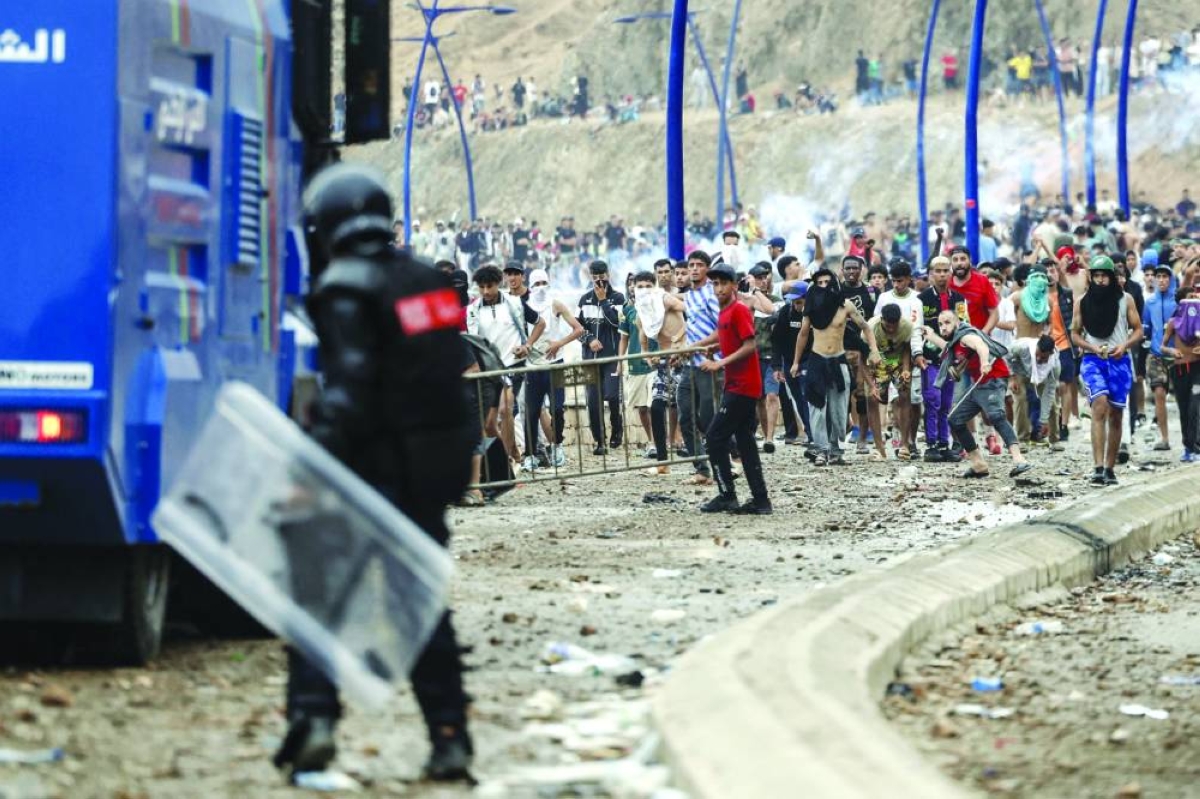
A government that gives border guards rifles but denies them the numbers, equipment, orders and political backing required to hold the line has not created a humane border. It has created armed scenery.
If officers are expected only to watch the breach, rescue those injured by it and direct the successful entrants towards registration, the state may as well replace their weapons with clipboards. They are no longer being used as a border force.
This is also a logistics problem. A real perimeter needs permanent surveillance, intelligence, layered barriers, rapid reserves, transport, controlled facilities, interpreters, evidence teams, return officers, medical support and a command structure that has rehearsed the worst day before it happens.
None of that can be improvised after 50,000 people are already inside a city of 85,000.
The sea is part of the perimeter
Territorial waters cannot remain an alternative entrance for anyone blocked on land. Maritime surveillance and interception must begin before unauthorised boats create an accomplished fact inside EU waters.
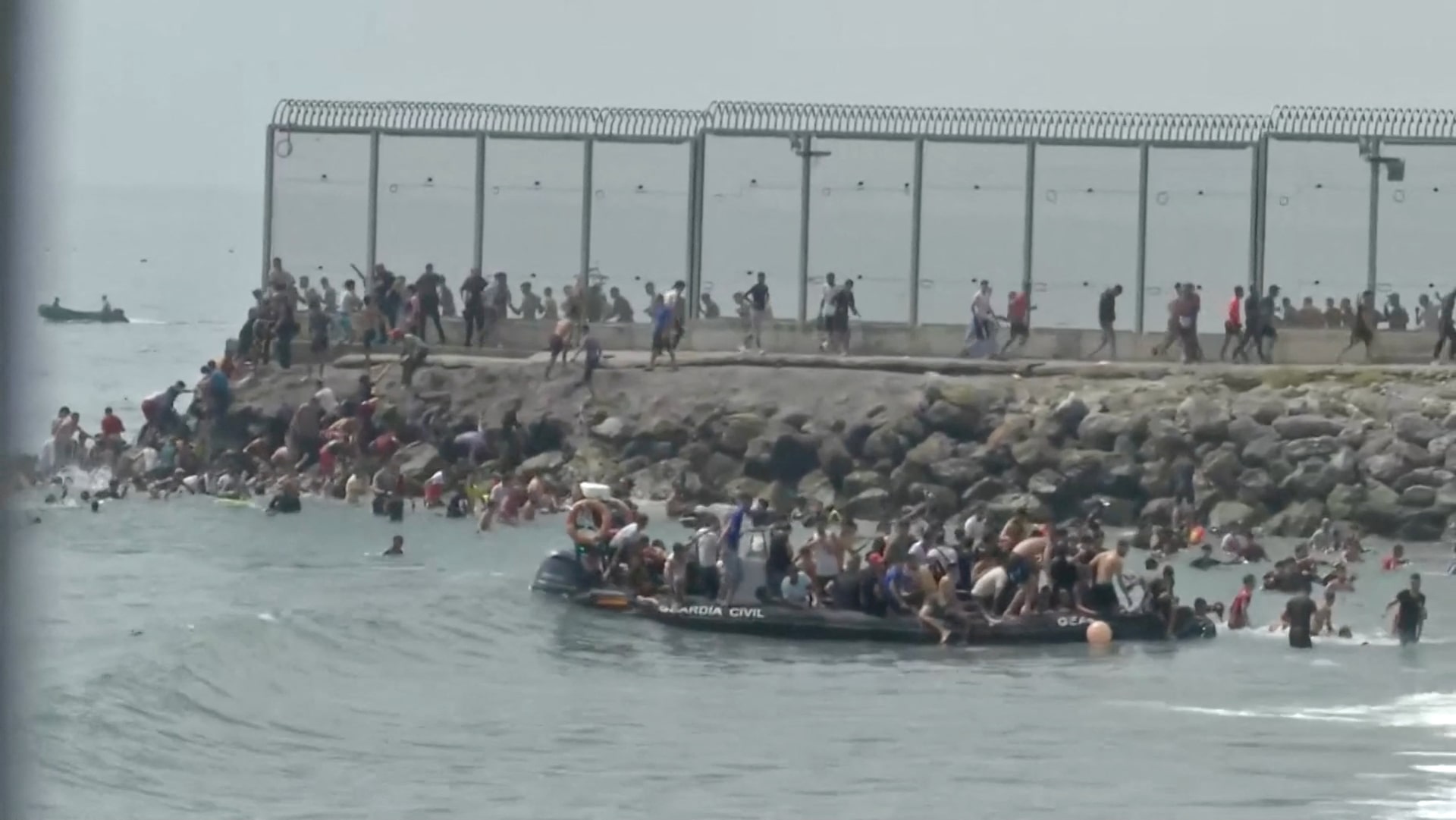
Rescue at sea is not an immigration visa. Saving a person from immediate danger does not mean that the rescued person chooses the destination or automatically enters the EU asylum and welfare system. Europe needs binding arrangements for interception, safe disembarkation outside the EU where lawful, external screening and prompt return.
NGO status must provide no immunity from ordinary law. Where evidence proves deliberate coordination with smugglers or intentional facilitation of unauthorised entry, the organisation and the responsible individuals must be prosecuted, and vessels or proceeds should be seized through due process.
The principle is the same on land and at sea: nobody should improve his legal or practical position by defeating the frontier.
Spanish citizens cannot remain the residual category
After Ceuta's border failed, attention moved rapidly to registration, accommodation, food, medical care, interpreters, legal assistance and return procedures.
Spanish taxpayers fund every part of that response. Ceuta's residents paid again through closed businesses, damaged property, diverted police resources and the fear created by tens of thousands of unidentified entrants in their city.
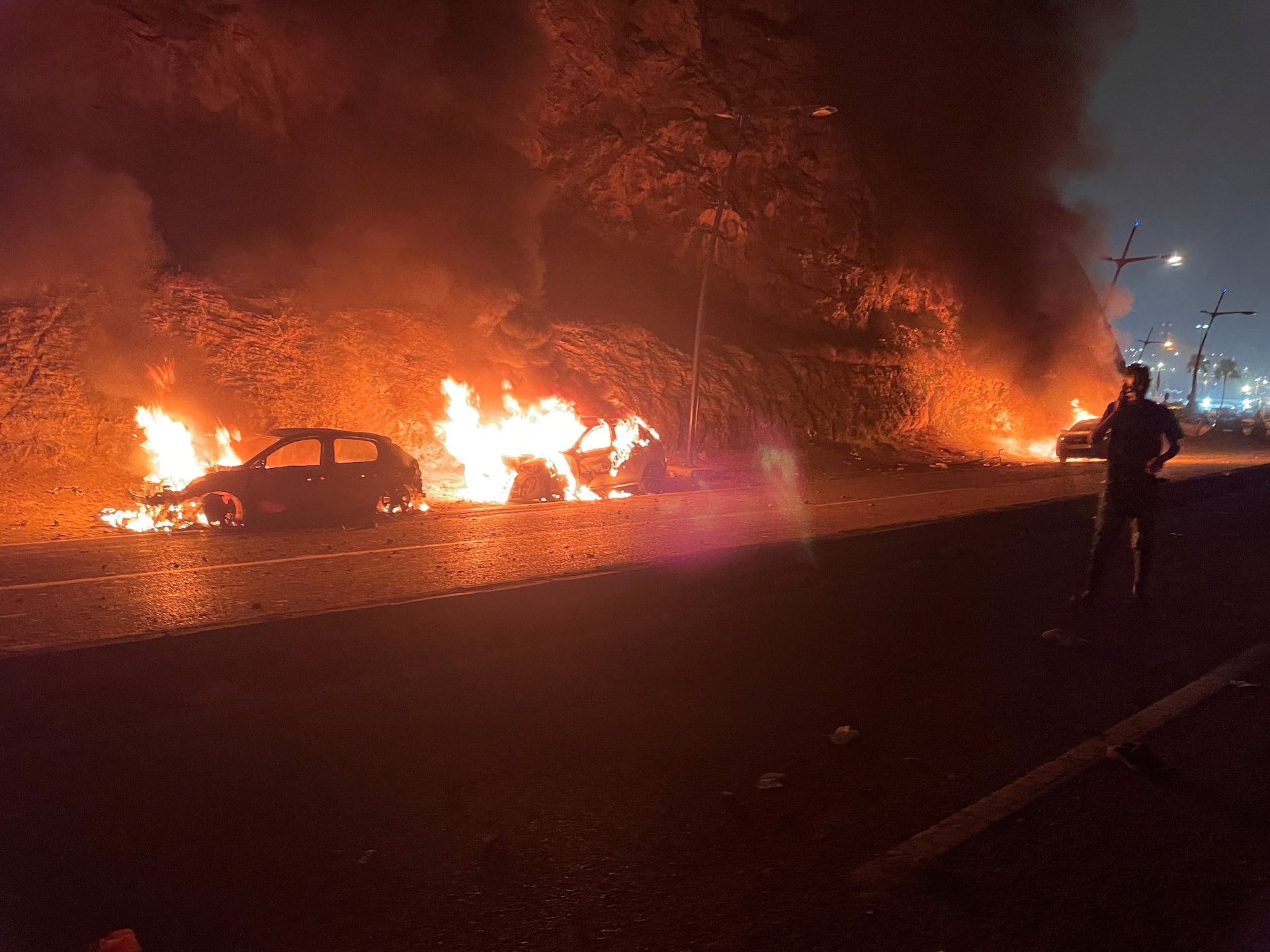
Their rights were treated as background: the right to security, to use their streets, to protect their homes and businesses, and to expect their government to control the national frontier.
European law speaks endlessly about the state's duties once a person has crossed. It speaks with far less urgency about the state's prior duty to the citizens who created it, fund it and rely on it.
That order must be reversed.
The first duty is to hold the perimeter. The second is to deal lawfully and efficiently with the exceptional cases that remain. Reception cannot be allowed to replace protection, and procedure cannot be allowed to replace sovereignty.
Build the law for the day it is attacked
Europe does not need another declaration of concern. It needs a complete chain from prevention to removal:
- Create a serious offence for knowingly participating in a forcible mass breach of an EU external border, aggravated by scale, violence, damage, organised action or resistance to officers.
- Maintain a permanent Spanish and European surge force for Ceuta and Melilla, with reinforcements moving before pressure reaches the fence.
- Build physical and maritime barriers capable of making mass entry fail, supported by continuous surveillance and intelligence.
- Give border forces clear rules, suitable equipment and political backing to escalate lawful force against an escalating attack.
- Photograph, fingerprint, identify and security-check every unauthorised entrant under controlled conditions.
- Process claims from safe, low-recognition countries rapidly in secure border or external facilities. Running out of beds or caseworkers must never become a route to the mainland.
- Make a completed illegal crossing legally and practically useless: no procedural advantage, no preferred location and no better prospect of admission than an application made through an authorised channel.
- Execute return decisions. A return order that is not enforced is only a document.
- Prosecute violence, property damage, attacks on officers, organised public disorder and proven facilitation of illegal entry.
- End mass regularisations that tell the world that time may convert illegal presence into lawful residence.
- Publish the cost of every major breach, compensate affected residents and businesses, and assign named political and operational responsibility for failures of preparation.
- Make cooperation with neighbouring states useful but never indispensable. European sovereignty cannot depend on a switch controlled outside the EU.
None of this abolishes asylum. It restores asylum to its proper scale: protection for the person who can prove persecution, not a mass-entry procedure activated by overwhelming the border.
The choice is sovereignty or administration after defeat
Ceuta was not primarily a migration-management problem. It was a test of whether Spain still decided who entered Spain.
For several hours, it did not.
The people who respected the frontier remained outside. The people who broke through gained territory, time and procedure. The officials gained thousands of files. The citizens gained fear, disruption, damage and cost.
That is not a humane balance. It is a state abandoning its first responsibility and congratulating itself for administering the consequences.
If "no entry" means "try again with a larger crowd," it is not a rule. If the physical border disappears when tested, it is not a border. If the response begins with registration after the breach, sovereignty has already lost to paperwork.
Europe must prepare for the next attempt before the crowd forms: officers in place, reserves ready, barriers intact, maritime routes covered, facilities available, evidence teams deployed, return transport arranged and political authority unmistakable.
The next mass breach must fail at the perimeter. It must not succeed and then become an asylum-processing exercise.
The EU should start treating its frontier as a security perimeter rather than an administrative reception desk.
A border that does not stop entry is scenery.
This article reflects confirmed public information available on 1 August 2026. Spain's Interior Ministry estimated that about 50,000 people crossed into Ceuta and that 48,300 had returned voluntarily by Friday evening. At least 57 deaths were reported. Final figures may change. Descriptions such as "invasion" and the policy recommendations are the author's opinion.
↗ Reuters: scale, returns, damage and the sovereignty breach
↗ Reuters: reported motives, online rumours and questions about the crossing
↗ Spain: immigration law on illegal entry, rejection and return
↗ Spain: Penal Code on damage, attacks on authority and public disorder
↗ EU Council: Morocco's safe-country designation
↗ EUAA: Moroccan recognition rates
↗ EUR-Lex: Spain's 3,301 border capacity and 6,602 first-year figure
↗ Spain: 1,174,978 regularisation applications in 2026
↗ EUR-Lex: EU Border and Coast Guard rules on the use of force
↗ Reuters picture gallery: 21 photographs from Ceuta and Fnideq, 30-31 July 2026
↗ Reuters report and photographs: torched vehicles and clashes at the Ceuta frontier
↗ AFP photograph: Moroccan security forces clash with the crowd near Fnideq
Reader discussion
Join the discussion
Comments are moderated. Disagreement and strong opinions are welcome. Spam, threats and personal abuse are not.