
PRESSUREREADY BLOG
A Border That Does Not Stop Entry Is Scenery.
Ceuta exposed something Europe would rather not say plainly: the right to seek asylum is not a right to cross wherever one chooses, economic migration is not refuge, and an external border must be enforced before the system behind it collapses.
BORDERS • 31 July 2026 • 14 min read
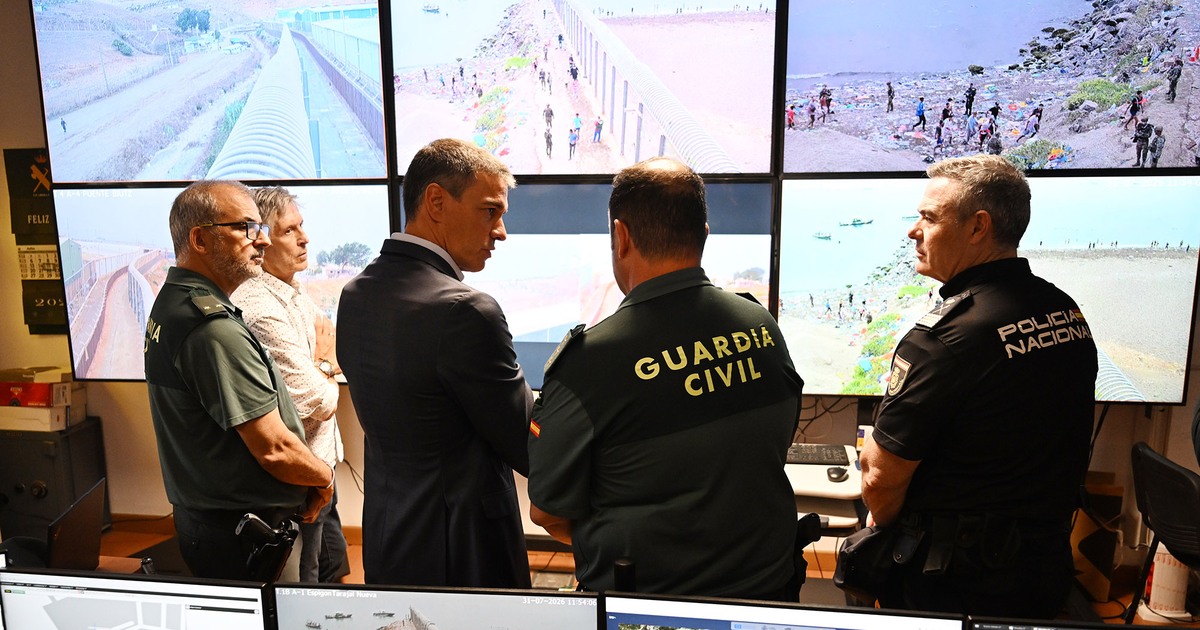
Prime Minister Pedro Sanchez and Spanish security officials review border-camera images in Ceuta on 31 July 2026. Pool Moncloa / Borja Puig de la Bellacasa.
I watched the images from Ceuta with anger.
Not anger because the people crossing were Moroccan. Not anger because many of them were poor, young or desperate for a better life. Wanting to leave a country with low wages and weak prospects is understandable. I have lived and worked outside my own country for much of my adult life. Migration can be useful, decent and necessary.
I am angry because roughly 50,000 people were able to enter Spanish territory in little more than a day, and Europe still reaches first for the language of reception, processing and humanitarian management instead of the most basic question: why were they allowed to cross the border at all?
By Friday evening, Spain's Interior Ministry said about 50,000 people had crossed into Ceuta since Thursday morning. The regional president put the number as high as 60,000. At least 57 people had died. The city has only about 85,000 residents. Police and reception facilities were overwhelmed, the army was deployed and the practical decision about who entered an external European Union border was made for hours by a crowd.
Most of those who crossed later returned voluntarily to Morocco. That reduced the emergency. It did not convert a spectacular loss of control into a successful policy.
Fifty thousand people entered because the border did not stop them. Forty-eight thousand went back because Ceuta could not feed, shelter or move them onward. Neither direction was controlled by a serious immigration system.
There is no point hiding this behind soft vocabulary. It was an unauthorised mass entry, a lethal human disaster and a failure of Spanish and European border control.
A border has one basic job
A border is not merely a line where the state records what already happened. Its first function is to decide who may enter before entry takes place.
That does not mean shooting swimmers, abandoning people at sea or refusing to hear a genuine protection claim. Spain had a legal and moral duty to rescue people in danger, treat the injured, protect children and provide access to asylum procedures.
But rescue is not the same as admission. Saving somebody from drowning does not settle whether that person has a right to enter and remain. A functioning border can do both things: prevent an unlawful crossing where possible, rescue life where necessary, and then keep the person in a controlled border procedure until a lawful decision is made.
Europe increasingly talks as if the only humane part of border policy begins after the border has failed. We discuss beds, food, relocation, registration and integration. All of those may become necessary. But they are not substitutes for preventing unauthorised entry.
The deaths make that distinction more urgent, not less. A system that allows a rumour to persuade thousands of people to swim around a breakwater is not compassionate. It has created a route on which hope, misinformation and weak enforcement combine to kill people.
The humane border is the border people know they cannot bypass.
An asylum applicant is not automatically a refugee
Language matters here because Europe has spent years blurring categories that its own law keeps separate.
A person who crosses illegally is an irregular entrant. If that person asks for international protection, he or she becomes an asylum applicant while the claim is examined. Only after a positive decision does that person become a recognised refugee or beneficiary of subsidiary protection.
The application creates procedural rights. It does not prove the claim.
This distinction is often lost within minutes. News reports call a moving crowd "refugees" before anybody knows their identity or reason for travelling. Campaigners speak as though questioning a claim means denying the existence of persecution. Politicians then become frightened of enforcing the border because every act of control can be presented as an attack on refugees.
That is intellectually dishonest.
Some Moroccans can have genuine asylum claims. A country does not need to be at war for an individual to face political, religious or other persecution. War is not the legal test; individual protection needs are. That is precisely why each claim must be heard.
But Morocco is not at war. It is not in a civil war. Most of the people interviewed in and around Ceuta spoke about work, wages and a better future in Europe. Those are real human concerns. They are not, by themselves, grounds for asylum.
The latest European Union Agency for Asylum figure makes the point brutally clear. In May 2026, only 6% of first-instance decisions involving Moroccan applicants across the EU+ granted refugee status or subsidiary protection. The figure is not zero, and the exceptions matter. It also means that 94% did not receive international protection at first instance.
When the great majority of claims from a nationality do not meet the protection test, it is reasonable to ask why people can enter first and become a long administrative problem later.
Europe already wrote the answer into law
The strangest part of the Ceuta failure is that European law now contains much of the answer.
The EU Asylum Procedure Regulation has applied to new applications since 12 June 2026. It establishes a mandatory border procedure in specified cases, including applications from nationals of countries whose EU-wide recognition rate is 20% or lower, subject to capacity rules and safeguards for vulnerable people.
The regulation says applicants in the border procedure are not authorised to enter the member state's territory. Their applications can be examined after an unauthorised crossing or after disembarkation following rescue. The procedure is intended to last no more than 12 weeks. If the claim is rejected, a return border procedure follows.
In other words, EU law does not require Spain to wave a Moroccan applicant through Ceuta, transfer him to the mainland and hope that an eventual return order will somehow enforce itself. It provides for screening, examination and, where justified, return at the external border.
But rights require capacity. If Spain has no staff, secure accommodation, interview teams, interpreters, judges, medical support, transport and return arrangements able to operate at scale, the legal procedure exists mostly on paper.
Ceuta showed that the paper system and the physical system were living in different countries.
Europe has politically disarmed itself
People ask why Spain and the European Union seem unable to act. The crude answer is that Europe has been castrated. The more accurate answer is worse: it has politically disarmed itself.
The Union still has police, armed forces, coastguards, laws, money, surveillance systems, diplomatic leverage and the authority to refuse entry. What it lacks is a stable political agreement to use those tools before a crisis becomes visible.
Responsibility has been broken into pieces:
- Spain guards the physical border but depends heavily on Morocco to stop crowds before they reach it.
- The EU writes common rules, while national administrations must provide the people and places that make those rules real.
- Courts protect individual rights, while governments sometimes use the judgments as an excuse for operational passivity instead of adapting their methods lawfully.
- Local authorities receive the human consequences, while national politicians debate terminology.
- Return decisions are issued by the state, but cooperation from countries of origin often determines whether they mean anything.
- Every institution can therefore explain which part belongs to somebody else.
Europe also fears the image of enforcement. A photograph of police stopping a family at a fence can travel around the world before anyone explains the law. The photograph of a city losing control is slower, more complicated and apparently less embarrassing to decision-makers.
So governments wait. They call the first arrivals manageable. They call the next arrivals pressure. They call the collapse a humanitarian emergency. Then they deploy the army after the border has already failed and announce that control will be restored.
Restored is doing a great deal of work in that sentence.
Spain has sent its own signals
This year's Spanish mass regularisation is not the direct cause of Thursday's crossings, and intellectual honesty requires saying so.
The scheme applied to people who could prove that they were already in Spain before 1 January 2026 and had been present for at least five months. A person who entered Ceuta this week cannot simply use it. The application window has also closed.
Nevertheless, the political signal matters.
Spain expected roughly 500,000 applications. By the closing date, it had received 1,174,978. The government presents the measure as a practical way to bring long-term residents out of the shadow economy, protect workers and recognise a reality that enforcement had already failed to change. There is a serious argument for doing that once people have lived and worked in a country for years.
There is also an obvious problem. Repeated retrospective regularisation teaches future migrants that illegal presence may eventually become legal residence. It tells people who obey normal visa and migration rules that waiting, paying and qualifying may be less effective than arriving first and waiting for politics to catch up.
Thursday's entrants were not eligible for the 2026 scheme. But anyone pretending that such decisions have no effect on expectations is refusing to understand how human beings make choices.
If Europe wants legal migration, it must make legal routes credible. If it wants to deter illegal migration, it must ensure that illegal entry normally ends in return rather than a lottery ticket for a later amnesty.
At present, the message is confused because the policy is confused.
When will Europe finally decide?
The question is whether empathy requires a democratic society to surrender the decision about entry. It does not.
A Moroccan citizen, or anybody else, may ask for asylum. That request must be heard. But asking is not receiving. Economic hardship is not persecution. A desire for a better life is not a legal right to choose one's country of residence. And crossing the border before making the request must not produce an advantage over the person who follows the law.
Spain and the European Union are not powerless. They are afraid of the political, legal and visual cost of saying no. They have therefore accepted a system in which saying no late, after years of procedure and failed return attempts, is considered more civilised than saying no clearly at the border.
It is not more civilised. It is less honest, less safe and ultimately more cruel.
A functioning asylum system needs a border strong enough to distinguish the person who needs protection from the person who simply wants admission. Without that distinction, public support for genuine refugees will continue to collapse. Citizens will stop believing the law, and desperate people abroad will keep believing the rumour.
When should Europe reinforce its external borders?
Before the next crowd forms. Before the next diplomatic dispute. Before the next court ruling becomes a TikTok promise. Before another 57 people die discovering that entry into Europe is not the same as a future in Europe.
A border that cannot say no cannot offer a meaningful yes.
And a border that does not stop entry is scenery.
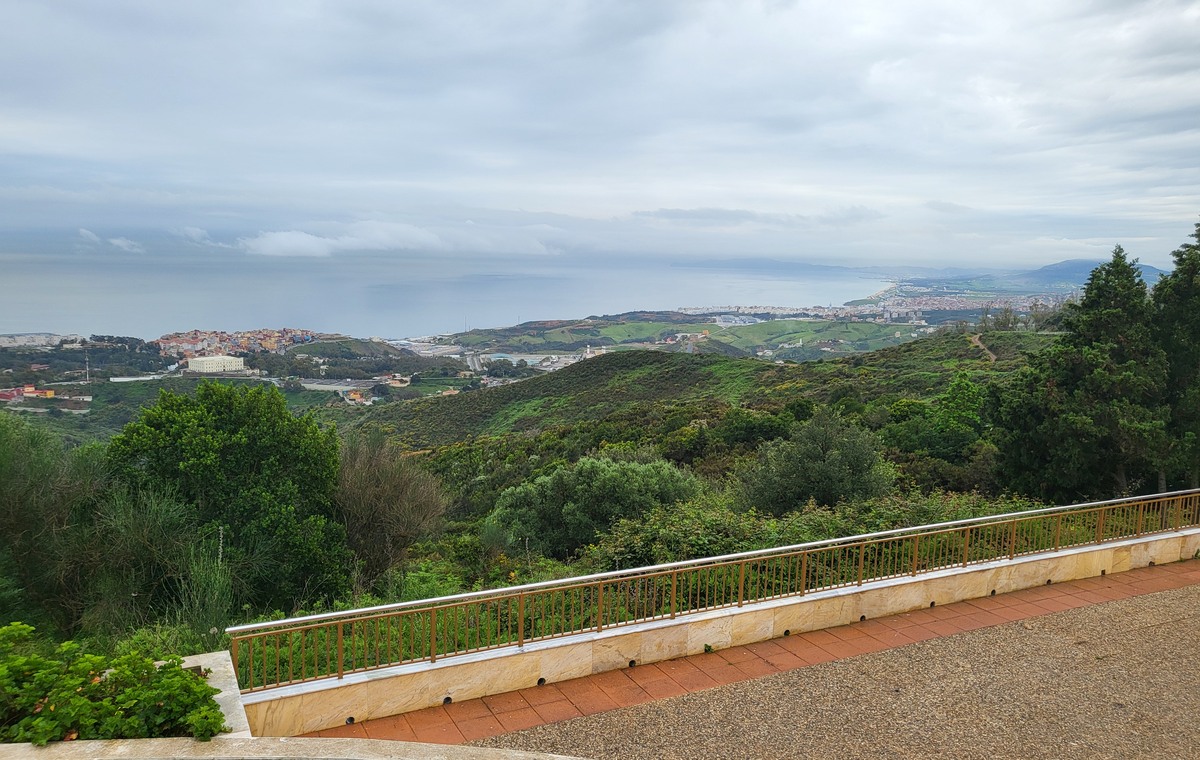
Ceuta is a small Spanish city on the North African coast. A movement of 50,000 to 60,000 people was not marginal pressure; it was an event on the scale of the city itself.
Sources and image credits
Figures in this article reflect official information available on the evening of 31 July 2026. The death toll and final crossing totals may be revised.
↗ Reuters: Spain says migrants are returning from Ceuta after 57 die in border rush
↗ Reuters: Social-media rumours and economic hardship fuel the surge
↗ Reuters: Ceuta warned of an emergency after 1,500 arrivals in the preceding week
↗ Spanish government: Prime Minister's statement and response measures
↗ Spanish Supreme Court: ruling on immediate returns of swimmers approaching Ceuta and Melilla
↗ EU Agency for Asylum: May 2026 recognition rates, including 6% for Moroccans
↗ EUR-Lex: Regulation (EU) 2024/1348 on asylum procedures and mandatory border processing
↗ EUR-Lex: Regulation (EU) 2024/1349 on return border procedures
↗ Spanish government: eligibility and cutoff rules for the 2026 regularisation
↗ Moroccan Ministry of Justice: official breakdown of 1,788 Throne Day royal pardons
↗ EU Annual Asylum and Migration Report: the EU-wide return rate stood at 24%
Hero photograph: Prime Minister Pedro Sanchez and Spanish security officials reviewing border-camera images in Ceuta on 31 July 2026. Pool Moncloa / Borja Puig de la Bellacasa. Cropped and resized under the Spanish government's reuse conditions.
↗ Spanish government website reuse conditions
Inline photograph: panorama from the Mirador de Isabel II in Ceuta, photographed in 2025 by Xemenendura, CC BY-SA 4.0. Cropped and resized.
↗ Inline photograph source and licence
Pressure changes shape. The work remains.
Reader discussion
Join the discussion
Comments are moderated. Disagreement and strong opinions are welcome. Spam, threats and personal abuse are not.